
终极一班3
Unitree IPO draws spotlight to China's fast-growing humanoid robot sector_我的网站

一 | 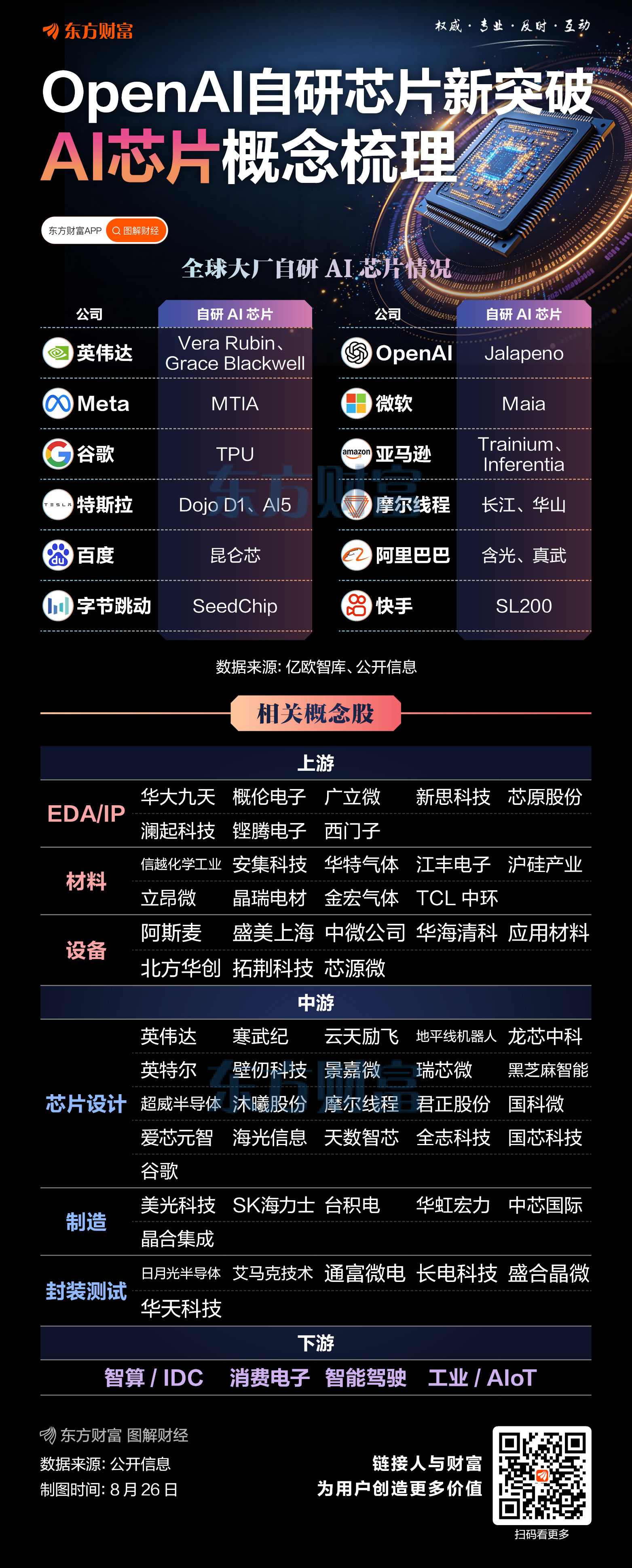 在AI大模型训练与推理需求爆发的推动下,AI芯片行业正经历深刻重构:竞争焦点从单一制程性能转向“专用架构+软件生态+能效效率”的系统级较量。而OpenAI自研AI芯片的最新消息,无疑泛起了新的涟漪。
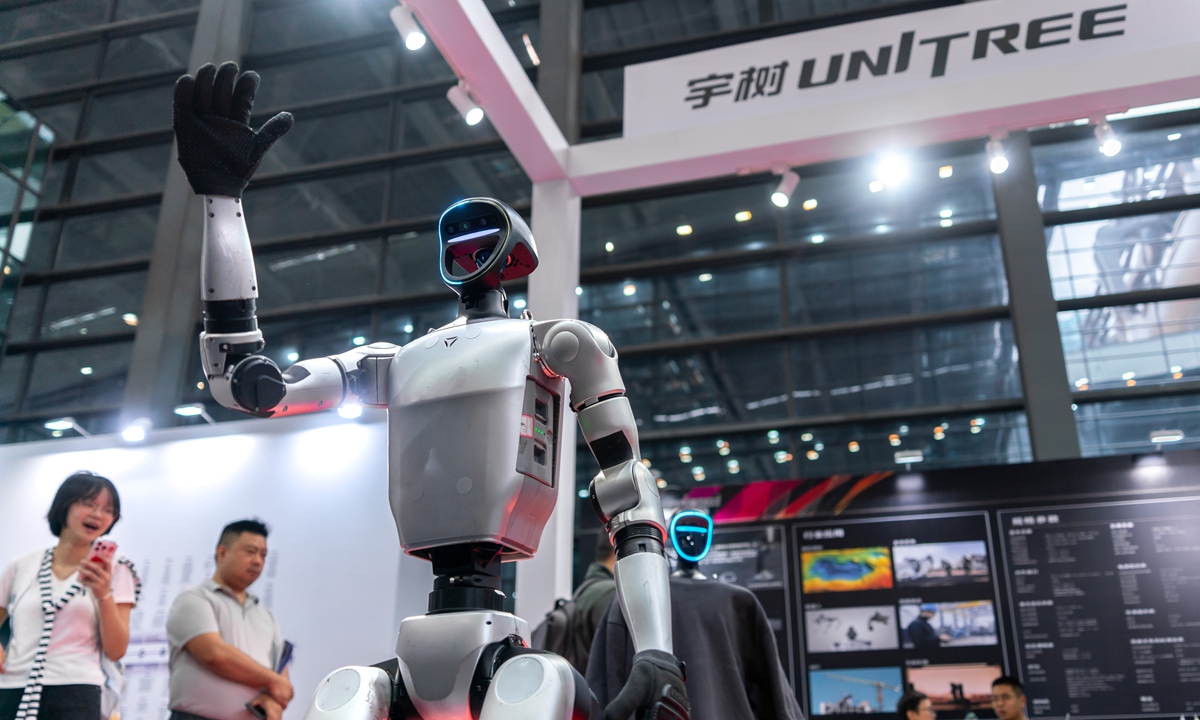
Chinese robot maker Unitree Robotics on Monday opened subscriptions for its initial public offering (IPO) on the Shanghai Stock Exchange's STAR Market, putting a leading player in China's fast-growing humanoid robot industry in the capital-market spotlight.
The Hangzhou-based company is offering about 40.45 million shares at 150.80 yuan (about 22 U.S. dollars) each, representing 10 percent of its post-offering share capital. The offering is expected to raise about 6.10 billion yuan in gross proceeds.
The offering drew overwhelming interest during preliminary price inquiries. After invalid bids and the highest-priced portion of proposed subscriptions were excluded, the remaining proposed offline subscriptions totaled 71.46 billion shares, 2,760.67 times the initial offline offering size before adjustment for strategic placement, according to the issuance announcement.
Founded in 2016 as a civilian robotics company, Unitree has established leadership in core robot parts, motion control, robot sensing and other comprehensive fields, focusing on high-performance general-purpose humanoid and quadruped robots, robot components and embodied intelligence models.
The company's prospectus shows that from 2023 to 2025, Unitree sold 33,294 quadruped robots and 5,632 humanoid robots. Its humanoid robot shipments exceeded 5,500 units in 2025, excluding wheeled dual-arm robots.
Unitree's revenue rose to 1.70 billion yuan in 2025 from 392.77 million yuan in 2024 and 159.13 million yuan in 2023. It posted a net profit of 278.21 million yuan in 2025, while the net profit attributable to the parent company after excluding non-recurring items stood at 590.75 million yuan, according to the prospectus.
Overseas sales remain an important part of the business, generating revenue of 731.66 million yuan in 2025 and accounting for 43.65 percent of its main-business revenue.
Having gone through the STAR Market's pre-review mechanism, the company saw its IPO application accepted by the Shanghai Stock Exchange on March 20 and approved by the listing committee on June 1, a span of just 73 days, marking a record pace, according to the China Securities Journal.
Unitree's IPO comes as robotics, AI-related products and innovative drugs are emerging as three new drivers of China's export growth, following the previous "new three" of electric vehicles, lithium batteries and photovoltaic products.
Trade data underscores the momentum. China became a net exporter of industrial robots for the first time in 2025. In the first half of 2026, its industrial robot exports reached 6.29 billion yuan, up 18.6 percent year on year, with products shipped to 141 countries and regions, while intelligent biomimetic robot exports exceeded 10,000 units, according to customs data.
Minister of Science and Technology Yin Hejun has said the three emerging sectors are developing rapidly and could become new pillar industries. Their rise points to a structural shift in China's trade advantages, as the country's global economic engagement increasingly extends beyond manufactured goods to technologies, digital capabilities and services.
Unitree plans to invest about 4.20 billion yuan of IPO proceeds in four projects covering intelligent-robot model research, robot-body research and development, new intelligent-robot products and an intelligent-robot manufacturing base.
The projects are intended to strengthen the company's research capabilities, expand production capacity and accelerate the application of general-purpose robots across more scenarios, according to the prospectus.
Brokerages including China Securities Co., Ltd. and Wanlian Securities have highlighted 2026 as a key year for humanoid robot applications and commercialization. China Securities Co. expects improving generalization capabilities to support broader deployment in industrial and commercial scenarios, while Wanlian Securities sees the year as a key window for mass-production validation and real-world scenario deployment.
。 据财联社报道,OpenAI自研的推理芯片Jalapeno迎来了新的突破,在测试中的表现优于英伟达当前的产品阵容。 OpenAI芯片业务负责人Richard Ho在接受采访时表示,Jalapeno芯片与英伟达GB300进行的比较测试中,Jalapeno在两个指标上占据优势:单位功耗所能处理的AI工作量,以及响应的速度。 需要指出的是,Jalapeno并未与英伟达最新一代的Vera Rubin芯片进行测试,后者刚刚开始出货。此外,Jalapeno也并非为AI模型训练而设计,其主要面向AI推理阶段,即模型完成训练后,根据用户提示生成响应并执行任务的阶段。

二 | 而训练则是英伟达技术最擅长的领域之一。

三 | 公开资料显示,除了英伟达这一行业领跑者之外,OpenAI等全球科技巨头均在积极自研AI芯片,比如亚马逊自研的Trainium系列、Inferentia系列芯片,微软自研的Maia系列芯片,Meta自研的MTIA系列芯片,特斯拉自研的Dojo D1、AI5等芯片,谷歌自研的TPU系列芯片。 国内龙头同样在积极自研AI芯片,比如阿里巴巴的含光、真武系列,百度的昆仑芯,摩尔线程的长江、华山等,快手的SL200,以及字节跳动的SeedChip等等。 头豹研究院表示,巨头们积极自研AI芯片,背后的深层次原因在于美国持续收紧先进芯片及制造设备出口管制,叠加全球AI资本开支向头部云厂商高度集中,加速了算力供应链的地缘割裂,各国纷纷押注自主生态。

四 | 亿欧智库表示,当前国产替代已告别零散的技术突破,进入全产业链协同攻坚的新阶段,AI芯片已完成“设计制造-设备-材料”全链条布局。

五 | 根据三方机构预测,到2030年,中国AI芯片自给率将升至86%,市场规模突破670亿美元。 从产业链来看,亿欧智库表示,可关注EDA/IP(华大九天、概伦电子、广立微等)、设备(盛美上海、中微公司、华海清科等)、芯片设计(寒武纪、海光信息、云天励飞等)、封装测试(通富微电、长电科技、华天科技等)等核心环节。

六 |  (文章来源:东方财富研究中心)。

七 |
Current article:http://8oq.ruidunguizanpaorangchongouxia.sbs/news/20260826_6058770.html
Published on:01:21:47